
The use of simulations to displace physical tests has become essential in accelerating analysis and reducing the cost of research and design. However, simulation results often differ from reality, making model calibration and validation critical pieces of the analysis workflow. Grounding models in reality using statistical calibration tools is the best way to use limited test data. The potential to reduce design cycle time and cost savings by ensuring that simulations are as close to reality as possible has never been greater.
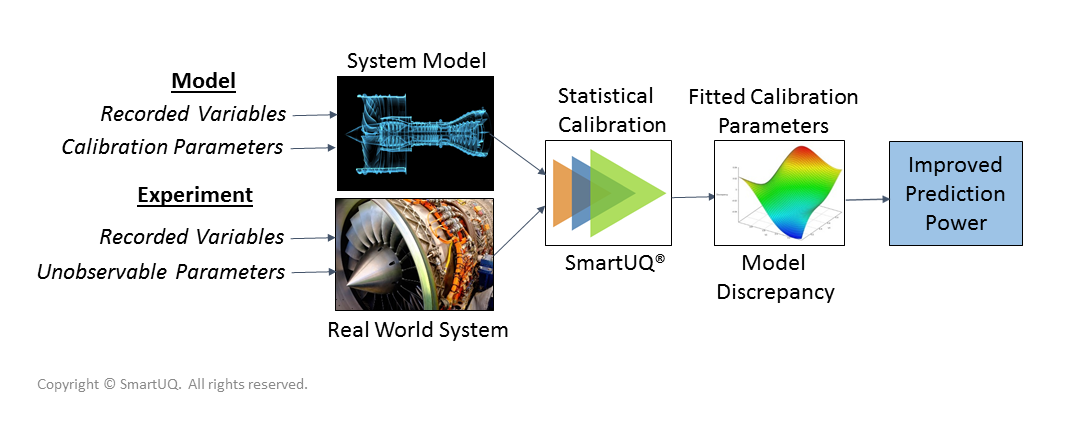 Statistical calibration work flow
Model calibration is the process of tuning model parameters so that the model is in better agreement with a set of experimental results. The parameters being tuned are usually not directly measured in physical tests. These include physical properties—such as material tolerances, fluid dynamics coefficients, soil properties, and engine operating points—or entirely non-physical, mathematical properties of the model.
Without proper calibration, the results of the model could be meaningless or even provide misinformation on its real-world counterpart. Accurate model calibration is widely regarded as a key step in establishing a simulation model with adequate reliability, and it is often necessary to calibrate a model before any further study or analysis can be conducted.
Using statistical calibration tools becomes essential when engineering models feature unobservable parameters, complex physics, or highly non-linear behaviors where manual tuning is difficult or impossible.
The latest generation of simulation tools include highly detailed physics, greater complexity, and more parameters. Physical tests are also producing increasingly complex data sets, where detailed instrument telemetry is common and handling it has become a big data challenge. The differences between simulation and testing results present new challenges and opportunities in uncertainty quantification and statistical calibration.
Statistical calibration has several important advantages over manual or pure data matching approaches:
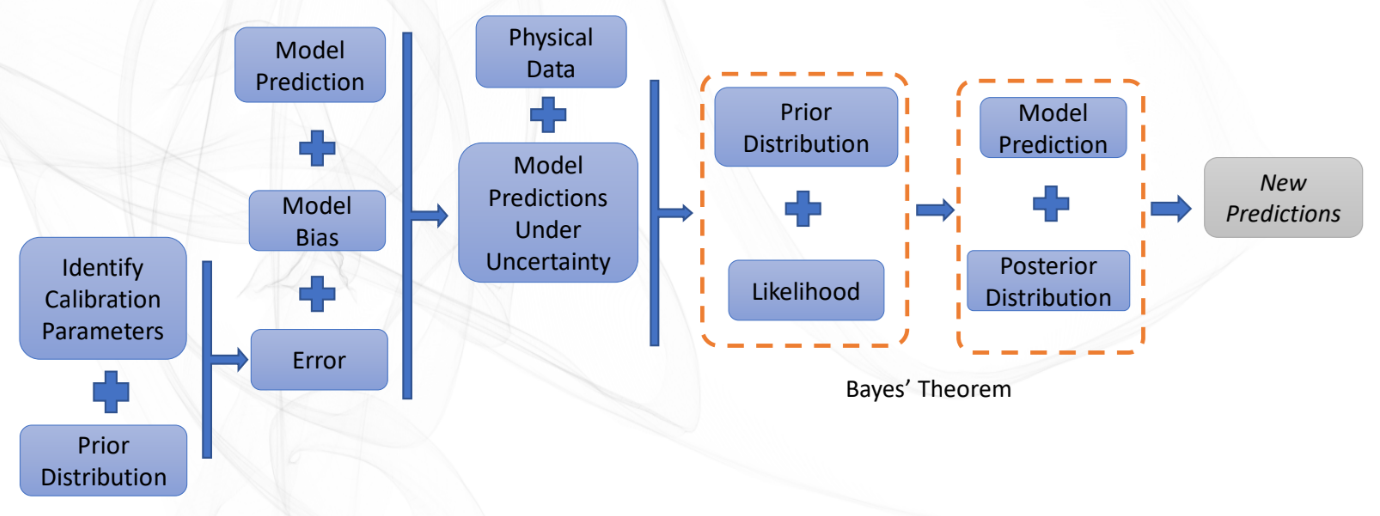 Bayesian calibration algorithm flow chart
Bayesian Calibration is a type of statistical calibration that aligns simulation physics with physical test rig or sensor data while explicitly quantifying measurement error, sensor noise, and underlying model discrepancies. These uncertainties are preserved in calibration parameter distributions and discrepancy models.
By capturing this information, Bayesian Calibration both tunes the simulation model and also lays the foundation for further uncertainty analysis including uncertainty propagation, reliability based optimization, and probabilistic model validation.
By using Bayesian calibration to ground the model and UQ to explore its variances, engineers can understand the risk profile and expected uncertainty of a design before physical prototypes are built. This means fewer failures, fewer prototypes, and fewer iterations. As with simulations themselves, a little upfront statistical calibration and uncertainty analysis can keep changes to the initial design phased and save millions of dollars worth of corrective work or warranty issues later.
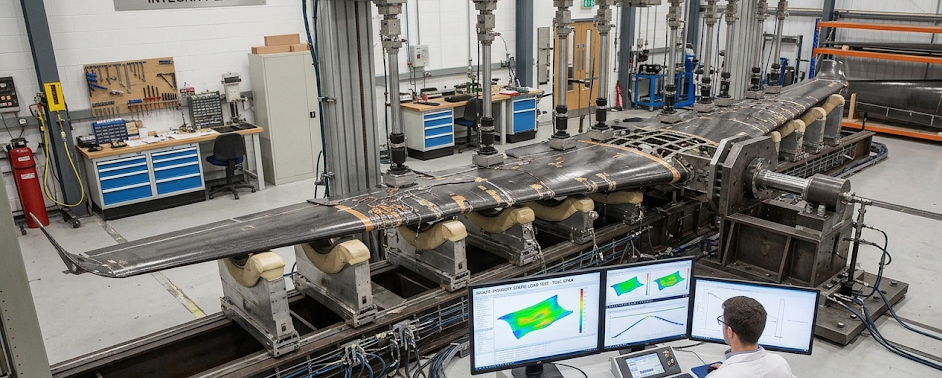
Predicting the structural durability of metalic and composite aerospace components requires evaluating stress histories under both cyclic and extreme conditions. The addition of environmental factors, corrosion, and manufacturing variation can mean computationally heavy simulations with a large number of partially known input factors.
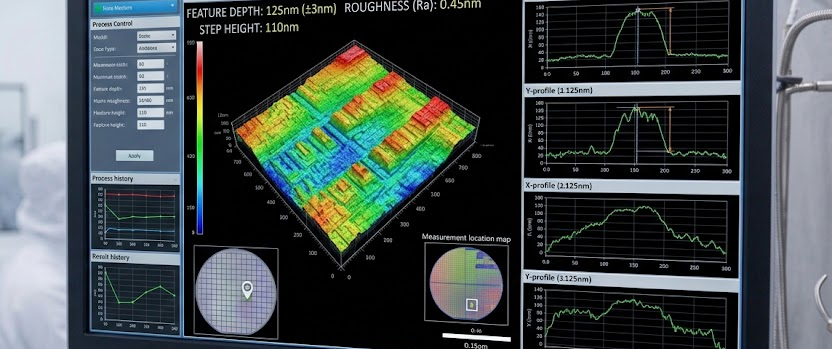
In semiconductor manufacturing equipment design, achieving cross-wafer uniformity during processing requires precise tuning of highly non-linear multi-physics CFD, reacting flow, plasma dynamics, and thermal-fluid interactions.
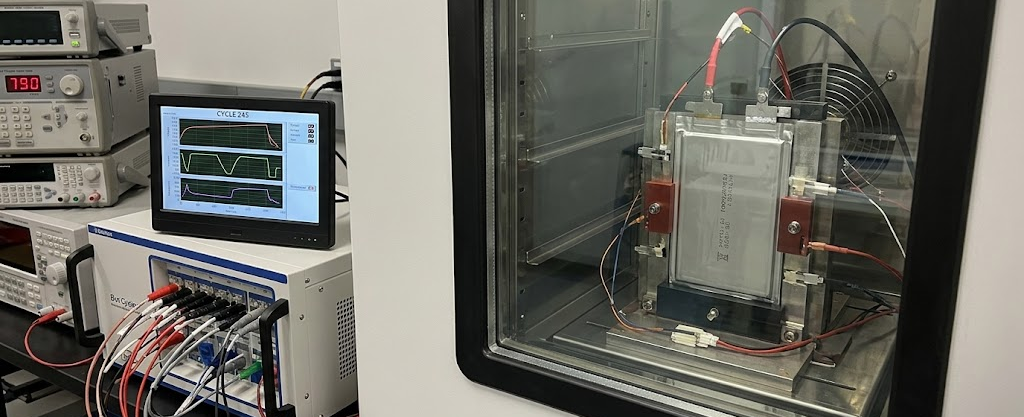
Electric vehicle development relies heavily on maintaining safe cell temperatures and predicting battery longevity. Evaluating EV battery health requires modeling cell aging uncertainty influenced by dynamic loads and environmental variability.